What is Motor Point Acupuncture?
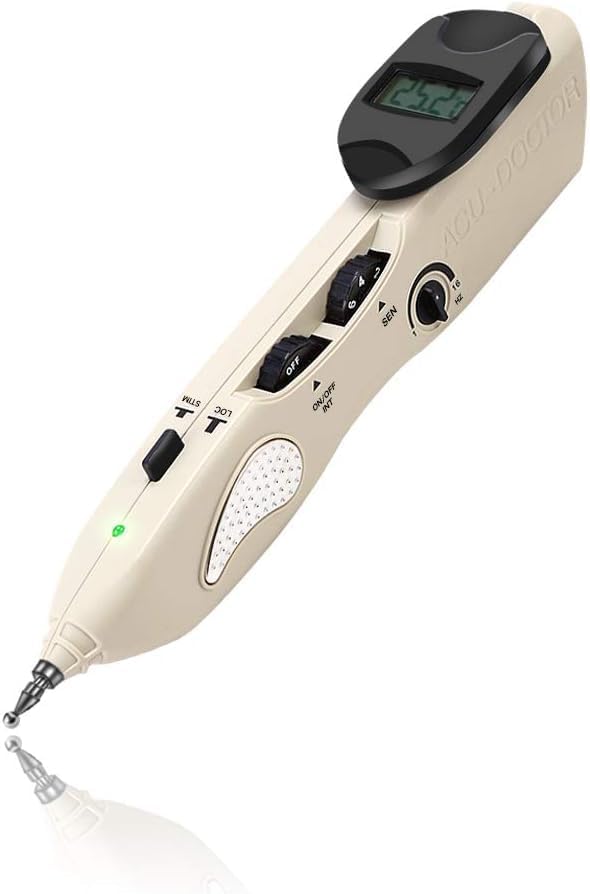
Motor Point Acupuncture is a highly effective form of soft-tissue therapy aimed at relaxing and reactivating tight muscles. It utilizes a very straightforward technique, involving a gentle touch to the belly of a muscle using an acupuncture needle, and then a touch to the needle with a handheld microcurrent device in order to stimulate muscle contractions. These contractions serve to “wake up” an unresponsive muscle, restoring its ability to properly fire, allowing it to relax into its proper resting length, while softening the surrounding connective tissue in the process. This technique is rapid, gentle, and efficient, and it allows for a very thorough approach to muscle work in which many tight muscles can be addressed in a given session. Excellent, lasting results can be attained in just one or a few sessions, making this a very appealing choice of therapy for just about anyone to try.
Motor Point Acupuncture functions very well on its own, and will greatly assist any program of exercise, rehabilitation or self-care. It can be extremely valuable to people whose lives, movements and rehabilitation processes have been brought to a standstill by the very real problem of tight muscles. This technique has the ability to get people “unstuck” like almost nothing else can.
The results are immediate and noticeable: Pain is alleviated, tissues become more pliable, circulation returns, flexibility and range of motion are restored, and strength, balance and coordination are all improved. This speeds recovery, promotes relaxation, improves posture and body mechanics, and reduces risk of injury from exercise and repetitive movement. Equally amazing is how the results last: Muscles remain reactivated and tissues remain soft well into the future. Motor Point Acupuncture is not about temporarily dulling pain, it is about restoring function and creating actual change.
I myself was so impressed by this technique that I made it the focus of my acupuncture practice. To my mind, the technique is so logical and effective that it is only a matter of time before it becomes standard practice in the worlds of therapy, rehab and sports. As of now only a few acupuncturists seem to be familiar with this technique, and there are no published materials detailing how to do it properly, or outlining strategies for applying it as an independent healing modality. The public at large is unaware that such a modality even exists. This needs to change.
I am proud to present the following overview of what this new and innovative technique has to offer, in the hopes of introducing it to clients, institutions and practitioners alike as a primary therapeutic option.
Motor Point Acupuncture is a means of “muscle reset”…
In its most basic sense, “resetting” a muscle means allowing it to return to its proper resting length and restoring its ability to fire. You could think of it as a restoration of the four basic qualities of a muscle: contractility, excitability, extensibility and elasticity. These four qualities go hand in hand: A muscle that inelastic is a muscle that cannot extend. A muscle that cannot extend also cannot contract. A muscle that can neither extend nor contract is one that is no longer excitable, since two of its most important reflexes – the “stretch reflex” by which it responds to changes in load, and the “golgi tendon reflex” by which it relaxes – both depend on changes in length. A muscle that remains immobile grows increasingly inelastic and unable to stretch. And a muscle that can do none of these things is unable to properly contribute strength, coordination, shock absorption or balance to the body. It will also hurt, heal slowly, fatigue easily, impair circulation and act as a constant source of irritation and stress.
…and “myofascial release”…
By releasing tight muscles we also relax tension within the surrounding connective tissue, or “fascia”, and this accounts for much of the effect in terms of pain relief, improved flexibility, and benefits to circulation, healing and stress levels. In addition to muscle reactivation, the Motor Point Acupuncture technique is essentially a way of reaching into an area of tight tissue and stretching it out from the inside, which is incredibly useful for fostering health in general.
…and “trigger point therapy”.
Trigger points (also known as “muscle knots”) are a primary cause of muscle pain and stiffness, and the ability of Motor Point Acupuncture to quickly and easily deactivate them is a major part of the reason why it works so well. Much of the work of of Motor Point Acupuncture session involves recognizing the known pain referral patterns of trigger points, which can often lead from the area experiencing pain back to the exact trigger point locations which are causing it.
The technique is quick and easy.
Resetting a muscle can take less than a minute, during which time a muscle can be observed going through a process of reactivation which progresses from slight vibration, to gentle pulsation, and finally a return to full strength contraction. Once this has been achieved, the work on those muscle fibers is essentially complete. There is no need to maintain contact with the area.
It is safe…
The amount of electrical current required to produce the muscle reset effect is extremely minimal and in no way overstimulating – you could not even feel it if touched to the skin. The term “microcurrent” denotes an amount of electricity designed to mimic the amount the body naturally uses. This technique can be readily applied anywhere on the body, including on the face.
…and gentle.
Motor Point Acupuncture does not operate on the principle of using a hand or a needle to physically separate muscle knots or tissues. Instead, it uses muscle contractions as a means of relaxing away tension while also stretching connective tissue in the process. The acupuncture touch is painless, the amount of current involved is minimal, and the only sensations involved are those produced by the movement of muscles and the stretching of tight tissue. The technique can be easily adjusted to remain comfortable and to produce its effects more gradually, and thus can be made tolerable for even the most sensitive of individuals. (People almost always start laughing during the first few releases – how bad could it be?)
It can be repeated as often as you’d like.
The muscle reset process does no damage to the muscles or tissues, nor does it result in the 24-48 hours of soreness typical of dry needling or other forms of deep tissue work. Only the very tightest muscles might retain some lingering soreness upon being stretched, but even this goes away in an hour or two at most. A person could return to exercise right after, as some clients choose to do. The benefit of not producing soreness or damage goes well beyond comfort, it is also a matter of effectiveness: For one thing, pain limits the amount of work that a client could tolerate in a session. Also, creating soreness is physiologically counterproductive to the cause of reducing irritation and overcoming guarding reflexes.
You will feel better immediately.
The combined effect of muscle reset and myofascial release allows for instant pain relief. Tissues soften, circulation returns to the area, and range of motion immediately improves. People are often surprised at how good they feel, and how little effort was required.
The results last!
Equally amazing is how the results of muscle reset can last for weeks, months or even indefinitely. Muscle reset does not simply dull pain, it fundamentally alters the conditions within the muscles and soft tissues which were creating pain and stiffness in the first place. People do enjoy returning to Motor Point Acupuncture again and again – not necessarily because the effects have worn off, but because they are excited to continue the work and see how far it can go!
The work is refreshing and relaxing.
The effects of myofascial release allow for stress reduction, improved energy levels, better sleep, and relief from a wide range of symptoms – just like any other form of acupuncture or effective bodywork. People find relaxation right there on the table, and they remain that way afterwards.
It can be used to address all sorts of common pain and mobility issues.
Issues of inflexibility, such as being unable to raise an arm overhead, turn one’s head side-to-side, bend over from the waist, get up from a chair without difficulty, flex a knee, or walk fluidly. Issues of chronic pain such as plantar fasciitis, pain radiating from the hips down the legs, soreness anywhere along the back, wrist pain and contracted fingers. Issues of weakness such as unstable ankles, fatigued lower back, or unsteady gait. What all these have in common is tight muscles, often deep in the body or in unexpected places. The combination of deep, accurate needling and microcurrent stimulation is perfect for addressing areas that other forms of therapy may miss.
Motor Point Acupuncture is a great value.
Even just one session can produce valuable results beyond what you might have been expecting. An initial course of therapy is typically two or three visits – not two or three times a week, but two or three times total. Motor Point Acupuncture allows for the problem of tight muscles to be quickly overcome so that people can turn their attention to other important aspects of the recovery process.
The work is very thorough.
The speed and efficiency of the technique allows for numerous bundles of tight muscle fiber to be released in a given session – dozens of them in fact, all throughout the body, producing results far beyond what other forms of muscle work can offer. When it comes to changing the condition of a person’s musculature, success comes from releasing all the muscles in a given area, restoring balance between pairs of muscles, and addressing muscles up and down a kinetic chain. Doing only a little bit of the work at a time (as is the case with other forms of trigger point therapy) is a recipe for failure, as the tight muscles that remain will continue to negatively affect the muscles you have released.
The Motor Point Acupuncture technique produces a complex and layered effect.
The use of microcurrent allows for a briefly sustained process of muscle contraction which stretches the tissue, pumps blood, stimulates cell function, activates reflexes and adjusts the tension within the fascial matrix at large. There are other methods for releasing trigger points, stimulating reflexes, and relaxing tight tissue, but only electroacupuncture can produce all three effects simulataneously while energizing cells and motor units in the process.
Motor Point Acupuncture is an improvement upon both dry needling and conventional electroacupuncture.
Basic dry needling can deactivate trigger points, but it lacks the ability of electroacupuncture to fully relax and reactivate muscles. While conventional electroacupuncture can produce a similar effect to that of Motor Point Acupuncture, the need for wires and clips results in a a stationary and limited approach to muscle work. The key innovations of Motor Point Acupuncture are the use of a handheld wireless device and the development of a two-handed technique which puts total control of the process into the hands of the practitioner. It allows for speed, instant feedback, and immediate adjustment of contact angle, depth and stimulation level, resulting in a much more efficient process overall.
Motor Point Acupuncture can be used to improve posture and structural alignment.
Patterns of structural misalignment are held in place by severely and chronically tight muscles. While stretching and exercise are key to the correcting these patterns in the long term, such efforts are largely useless without first releasing and activating key muscles, and softening areas of very tight fascia. It is important to remember that tight muscles which harbor trigger points will actively resist being stretched – they first need to be reset before the body will allow them to relax.
Muscle reactivation facilitates rehabilitation and exercise.
Resetting and reactivating tight muscles is the key to being able to train and rehabilitate more safely and effectively. Muscle reactivation helps your body to properly “recruit” muscles into your movements, which instantly restores strength, improves body mechanics, reduces strain on joints, and decreases the risk of injury. No matter what your goals for training, rehabilitation or self-care, resetting tight muscles can improve your outcomes.
Releasing tight muscles and trigger points can help to reverse the long-term effects of chronic pain.
Chronic pain can lead to changes within the central nervous system that eventually give rise to a state of hypersensitivity. This process, known as “central sensitization”, is at the root of many systemic pain conditions such as fibromyalgia. The good news is that these changes can be gradually reversed by effective forms of therapy. People with systemic pain conditions need their trigger points and muscles released as much as anyone else.
Motor Point Acupuncture treatments are not structured in the same way as conventional acupuncture.
Part of the appeal of Motor Point Acupuncture is the way in which muscles are treated one-by-one, and there is no need to be “pinned to the table” for any length of time. This is to take nothing away from conventional acupuncture, which is still one of the most soothing and healthy things a person can possibly do (and a service I offer as well), but some people do have trouble relaxing into that kind of experience, and they would be well served to know that Motor Point Acupuncture is different.
The Motor Point Acupuncture technique requires no “acupuncture language” to explain.
The mechanisms and effects of Motor Point Acupuncture are easily explained in terms of science and biology, without the need to invoke any of the metaphorical language unique to acupuncture. This is helpful for bridging the cultural gap behind which acupuncture typically resides, as well as earning the trust of more science-minded individuals. (When I employ this method I tend to refer to the tools being used as “contacts” as opposed to needles, to emphasize how they are simply being used to conduct electricity.)
Motor Point Acupuncture is a style of acupuncture all its own.
Acupuncture in general works by stimulating and improving the condition of connective tissue, and the Motor Point Acupuncture technique is effectively a method for doing just that. There is no need to limit this technique to being “just for muscle pain” – a powerful effect on the soft tissues is also a powerful effect on the rest of the body. People who are looking to address issues of stress, digestion, respiration, gynecology, or other aspects of health often find that the path to healing runs right through the relaxation of tight muscles and fascia. The effects of conventional acupuncture treatments can also be enhanced via the momentary (or prolonged) application of microcurrent to various points.
Releasing tight muscles is a way to be proactive about health.
Muscle tightness is often the result of postural issues and repetitive strain, but it sometimes also reflects an underlying organ imbalance or disease process. While no form of acupuncture is intended as a means of diagnosing or curing disease, releasing tight muscles can serve the important function of clearing away the majority of a person’s muscle tension to allow underlying patterns to become more apparent, thus helping a person to gain a clearer sense of their current state of health. Plus you’ll feel much better in the process! There is no downside to doing muscle work.
Motor Point Acupuncture has the potential to represent a new paradigm for healing and rehabilitation.
I refer to this paradigm as “structural”, meaning it is primarily concerned with the both the overall shape of a body, and the distribution of tension within its cells and tissues, as a determining aspect of function. A structural paradigm would fit in perfectly alongside a chemical paradigm (as per medicine), and an energetic paradigm (as per acupuncture) to form a more integrated view of how kinematics, physiology and health are all directly impacted by states of physical tension.
In short, sessions of Motor Point Acupuncture can produce the kinds of results people are seeking from therapy – simple, lasting, effective, economical, and natural. It compares very favorably with other forms of soft tissue work, including massage, trigger point therapy and acupuncture. But in case it sounds like I am trying to produce a one-sided view of this practice, let’s also discuss some of its limitations:
Electrical stimulation is not appropriate for certain people.
The classic set of contraindications for electroacupuncture and electrical stimulation in general is as follows: Pregnancy, Pacemakers/Defibrillators, Epilepsy, and working around tumors or skin diseases. While microcurrent stimulation is very gentle it would still be wise to adhere to these these precautions in practice.
Muscles need to be healthy in order to be reset.
This means they would need to have proper innervation and could not be physically separated or torn. Also, muscle reset is unlikely to reverse the effects of muscle disorders originating in the brain or spinal cord.
Muscle reset is no substitute for stretching and exercise.
The best results from Motor Point Acupuncture are attained when combined with at least a certain amount of exercise and stretching afterwards. While muscle reset can allow a person to overcome the limitations imposed by tight muscles, most people will still need to strengthen areas of weakness in order to maintain proper muscle balance and posture. The good news is that once tight muscles are reset, stretching and exercise will become much more effective.
Muscle reset is no substitute for necessary orthopedic interventions.
While effective muscle work can help to prevent unnecessary surgeries, and can also promote healing by relieving tension on strained tendons and ligaments, the fact remains that surgical repair is sometimes a necessity. No form of acupuncture should ever be intended as a replacement for needed medical care.
Muscle reset is no substitute for nutritional supplementation.
The effects of muscle work can only go so far when a person is suffering from considerable vitamin or mineral deficiency. Potassium, magnesium, B and C vitamins and many other nutrients are needed to keep muscles healthy, supple and responsive.
Muscle reset is no substitute for detoxification.
Colonics, chelation, cupping, bloodletting, saunas, herbal formulas and other approaches are all potential options for helping the body resolve the toxicity of modern life and stay healthy. The body often stores toxins within congealed blood, which itself leads to chronically stiff and painful muscles. You may wish to look into a method known as hijama, or “wet cupping”, which is a service I wholeheartedly advocate for.
Some muscles require longer-term assistance.
When an area of the body has been tight for a very long time the fascia around it can progress beyond stiffness to also becoming thick and gummy, literally glued to itself. The muscles in these areas, while they can be reset in the short term, require repeated applications of the technique to alter the quality of the tissue and allow for long-term relief. I believe that one of the effects of muscle reset is to stimulate the various functions of connective tissue, one of which is to remodel itself by producing enzymes to dissolve incorrectly deposited tissue. This type of process would not happen all at once, although the situation can noticeably improve with each treatment.
Motor Point Acupuncture requires a very specific set of skills to perform.
Practitioners would need to be highly competent and licensed “dry needlers” or acupuncturists, with a desire to focus on musculoskeletal issues and a proficiency in the Motor Point Acupuncture technique itself – which is a rare combination. They would also need to be students of anatomy and muscle function beyond what is taught in basic acupuncture programs: thorough knowledge of trigger point pain referral patterns is a must, and an understanding of kinesiology, gait and posture is very important.
As a method, Motor Point Acupuncture requires time and attention.
While the technique itself is remarkably efficient, taking the time to remodel the muscular layer of the body is involved work. Practicing this method requires dedicated one-on-one time which many healthcare providers are not willing to provide. This is not to say that Motor Point Acupuncture is impractical from a practice standpoint – quite the opposite in fact, as it produces real results which clients enjoy. It just means that a practitioner would have to be dedicated to this mode of practice.
The fear of needles may keep some people away.
As with conventional acupuncture, people’s negative perception of the idea of needles is certainly a factor to be overcome. But, as is also the case with conventional acupuncture, once people try it they usually find that such fear is unwarranted. By the end of a session of a session of Motor Point Acupuncture, the act of resetting a muscle becomes something very casual and familiar. I like to emphasize the particular gentleness of this style, as well as the high upside of the effects it produces, as a way of encouraging people to overcome their apprehensions and give it a try.